Program · 17 Jul 2026
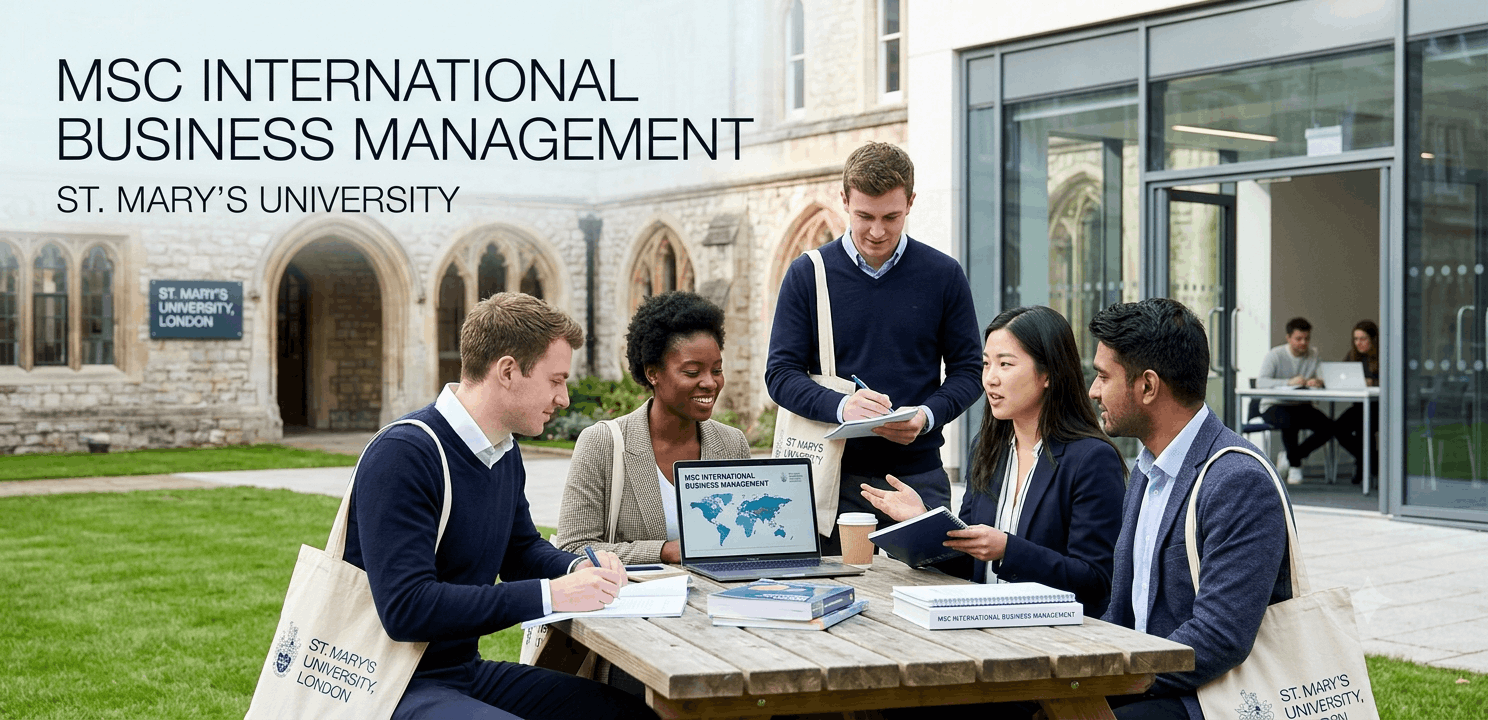
MSc International Business Management at St. Mary’s University
The MSc International Business Management at St. Mary's University is a one-year postgraduate programme designed for st...
Read More
Free consultation — no commitment required.
Your trusted partner for overseas education and access to top global study opportunities

Admission Rate
98%
Across all destinations
Avg. Cost Savings
₹20L*
vs. self-managed admissions
300+
Partner Universities
50+
Destinations Covered
98%
Admission Rate
₹20L*
Avg. Cost Savings
*vs. self-managed admissions
Quick facts, outcomes, and career advantages.
MS in UK Destinations
Explore leading cities with world-class universities and graduate programs programs
Program · 17 Jul 2026
The MSc International Business Management at St. Mary's University is a one-year postgraduate programme designed for st...
Read More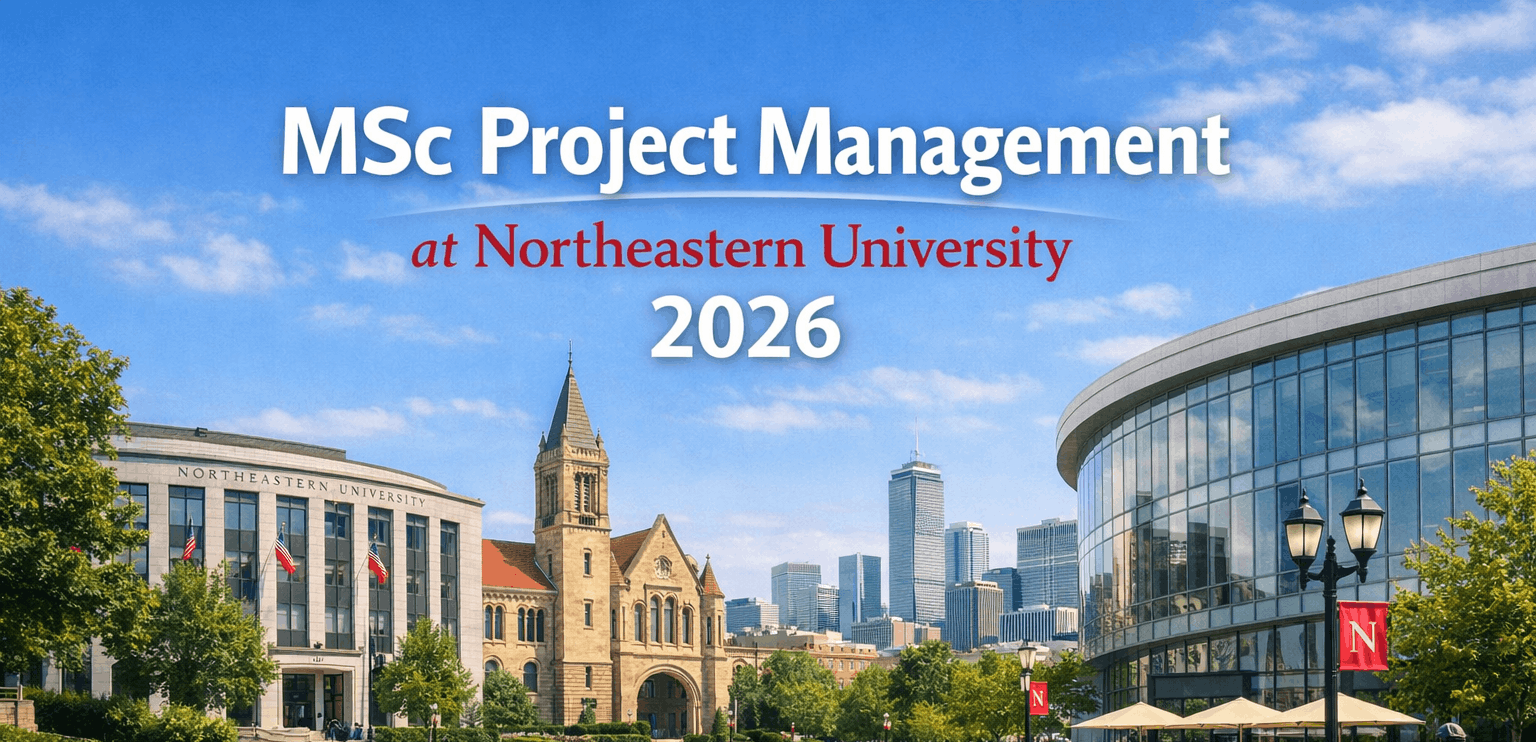
Program · 15 Jul 2026
The MSc Project Management at Northeastern University is a STEM-designated master's programme designed for students who...
Read More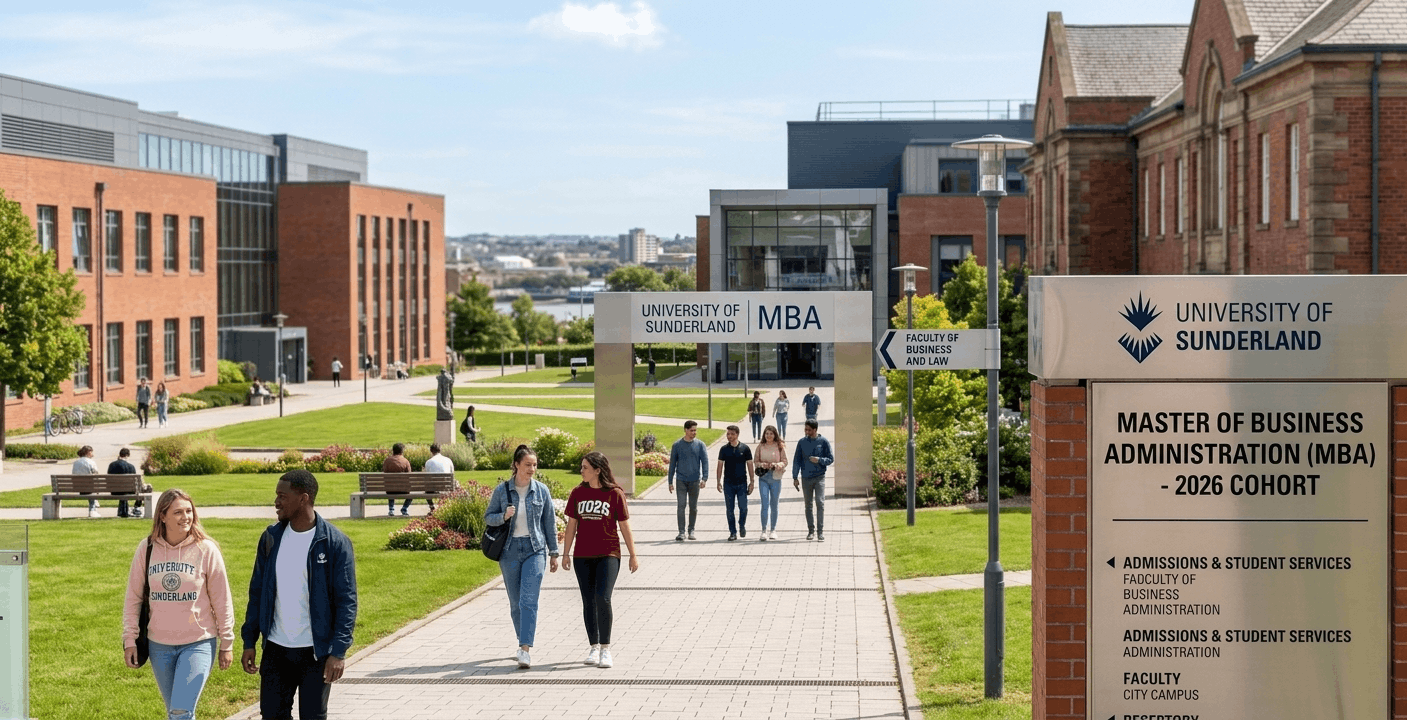
Program · 13 Jul 2026
The Master of Business Administration at University of Sunderland is a practical, career-focused programme designed for...
Read More
Masters · 02 Jul 2026
Pursuing MSc Data Science at the University of Roehampton is an exceptional opportunity for Indian STEM and computing g...
Read MoreEnroll in top-tier programs built to accelerate your career growth.
Follow these simple steps to start your study abroad journey
Choose the best universities and programs based on your goals.
Prepare and complete required standardized tests.
Submit your application to selected universities.
Complete visa process and prepare for departure.
Everything you need to know before you begin your study abroad journey
Yes, a one-year Masters in UK is widely recognized and respected across the world. UK universities follow rigorous academic standards, and the shorter duration does not compromise quality—it is more intensive. Employers often value UK degrees because they emphasize critical thinking, research, and practical application. In fact, many global employers actively recruit from UK institutions due to their strong academic reputation and industry alignment.
Completing a Masters in UK does not automatically grant permanent residency, but it can be a strong pathway toward it. After graduation, students can apply for the Graduate Route visa (2 years), during which they can work and gain experience. If you secure a job with a licensed sponsor, you can switch to a Skilled Worker visa. Over time (typically 5 years of lawful residence under eligible visas), you may become eligible to apply for Indefinite Leave to Remain (ILR), which is the first step toward permanent settlement.
Admissions to top-tier UK universities are competitive but not impossible. Universities evaluate applications holistically, considering academic performance, statement of purpose, and relevant experience. Unlike some countries, UK universities place strong emphasis on subject relevance and clarity of goals. A strong SOP and well-aligned academic background can significantly improve your chances, even if your grades are not perfect.
Yes, international students on a Student visa can work up to 20 hours per week during term time and full-time during holidays. Common part-time roles include retail, hospitality, university campus jobs, and internships. While part-time work can help with living expenses, it typically does not cover full tuition fees. Students often use these jobs for financial support and gaining work experience in UK job market.
Job prospects depend on your field, university, skills, and networking efforts. Sectors like technology, finance, healthcare, and consulting offer strong opportunities. The Graduate Route visa gives you time to find employment without sponsorship pressure initially. However, long-term employment depends on securing a Skilled Worker visa-sponsored role. Students who actively pursue internships, build networks, and gain UK experience tend to have better outcomes.
Yes, UK universities offer flexibility for students looking to transition careers. Many programs, especially in business, management, and data-related fields, accept students from diverse academic backgrounds. However, for technical programs like engineering or computer science, some foundational knowledge may still be required. Universities may also offer conversion courses specifically designed for students changing fields.
The SOP is one of the most critical components of your application. It allows you to explain your academic journey, career goals, and reasons for choosing a specific course and university. UK universities particularly value clarity, relevance, and purpose in SOPs. A well-written SOP can strengthen your application significantly, especially if your academic scores are borderline.
As of recent UK immigration updates, most postgraduate taught students are not allowed to bring dependents unless they are enrolled in research-based programs (such as PhD or research Masters). This is an important consideration for married applicants. Policies may evolve, so it’s advisable to check the latest UK government guidelines before applying.
UK is generally considered a safe country for international students, including Indians. Universities provide strong student support services, including safety guidance, counseling, and accommodation assistance. Like any country, safety depends on location and personal awareness. Cities with large student populations tend to be more accommodating and secure. Students are advised to follow basic safety practices and stay informed about their surroundings.
You can reapply after addressing these issues. Many students successfully secure visas on their second attempt by strengthening documentation and ensuring compliance with all requirements. Seeking expert guidance can help reduce the chances of rejection.
The value of a Masters in UK depends on your career goals, field of study, and financial planning. The shorter duration reduces overall cost compared to countries with longer programs, and the Graduate Route visa adds career flexibility. For students targeting global exposure, faster career entry, and international work experience, UK offers strong ROI. However, outcomes depend on choosing the right course, building relevant skills, and actively pursuing job opportunities.
Quick Overview:
Key Highlights:
| Category | Details |
|---|---|
| Course Duration | 1 year (full-time) |
| Course Types | MSc, MA, MBA, MRes, MPhil |
| Top Universities | Oxford, Cambridge, Imperial, UCL |
| Popular Fields | Management, CS, Data Science, AI, Finance |
| Tuition Fees | 9,000 to 50,000 GBP (INR 11.3L-62.6L)/year |
| Living Expenses | 800 and 1,000 GBP (INR 1.00L-1.25L)/month |
| Post-Study Work | Graduate Route Visa, up to 2 years |
UK earns its reputation as a top postgraduate destination through globally ranked universities, strong research output, and genuinely career-focused programmes. That reputation centres largely on the "Golden Triangle," Oxford, Cambridge, and leading London institutions, alongside the wider Russell Group network known for academic strength and solid graduate outcomes.
That said, the best university isn't automatically the highest-ranked one, it's the one that actually fits your course, career goals, and preferred location. Here are some of the top universities in UK worth considering for a masters.
Here are some of the top universities in UK for masters programs:
| Top Universities for Masters in UK | QS World University Rankings 2027 | Approximate Annual Masters Tuition Fee (GBP / INR) |
|---|---|---|
| Imperial College London | =2 | GBP 25,000–45,000 (INR 31.3L–56.3L) |
| University of Oxford | #4 | GBP 25,000–50,000 (INR 31.3L–62.6L) |
| University of Cambridge | #6 | GBP 25,000–50,000 (INR 31.3L–62.6L) |
| University College London (UCL) | =8 | GBP 20,000–40,000 (INR 25.0L–50.1L) |
| University of Edinburgh | #35 | GBP 18,000–35,000 (INR 22.5L–43.8L) |
| King's College London (KCL) | #37 | GBP 20,000–40,000 (INR 25.0L–50.1L) |
| University of Manchester | =40 | GBP 18,000–35,000 (INR 22.5L–43.8L) |
| University of Bristol | #57 | GBP 18,000–35,000 (INR 22.5L–43.8L) |
| London School of Economics (LSE) | #62 | GBP 25,000–45,000 (INR 31.3L–56.3L) |
| University of Warwick | =68 | GBP 20,000–35,000 (INR 25.0L–43.8L) |
Note: Tuition fees are indicative for international students and may vary depending on the course, specialization, and department.
Students often choose programmes such as a Masters in Computer Science in UK, Masters in Finance in UK, Masters in Marketing in UK, and Masters in Project Management in UK to prepare for careers in technology, business, and management.
Those interested in healthcare commonly pursue a Masters in Physiotherapy in UK, while students aiming for careers in digital security increasingly opt for a Masters in Cyber Security in UK, one of the fastest- growing fields in today's job market.
Here are some of the most popular masters courses in UK and what they offer:
| Course | What It Covers | Career Outcomes |
|---|---|---|
| Computer Science & Cyber Security | AI, cloud computing, and data protection, built around rising cyber threats and rapid digital transformation | Security analyst, ethical hacker, cloud security engineer |
| Business & Management | Case studies, internships, and industry projects covering leadership, consulting, and strategy | Roles across virtually every sector, genuinely versatile |
| Finance & Accounting | Investment banking, fintech, corporate finance, and risk management, backed by London's status as a global financial hub | Strong placement opportunities across banking and fintech |
| Engineering | Mechanical, Civil, Electrical, and Automotive Engineering with real practical application | Infrastructure, energy, and manufacturing sectors |
| Healthcare & Life Sciences | Public Health, Biomedical Sciences, and clinical fields in a genuinely high- demand, stable sector | Hospitals, research labs, healthcare organisations |
| Data Science & Artificial Intelligence | Machine learning, big data, and analytics, among the fastest-growing paths globally | Tech, finance, and consulting roles |
| Energy & Environmental Studies | Climate tech, renewable energy, and environmental consulting, driven by net-zero targets | Sustainability-focused roles across energy and consulting |
| Law & Social Sciences | LLM, International Relations, and Economics | Law firms, policy-making, government bodies, global organisations |
While good grades matter, they are only one part of the application. UK universities assess your overall profile, including your academic background, skills, and fit for the program.
International students need a recognized bachelor's degree, English proficiency scores, and documents like a personal statement, references, a resume, and transcripts.
To make the process clearer, here are the main eligibility and admission requirements for masters in UK:
To apply for a masters in UK, students generally need:
GRE or GMAT requirements are not mandatory for most UK universities, but may be required in some cases.
International students must prove English proficiency through accepted tests.
Commonly accepted tests include:
Work experience is not mandatory for most masters courses in UK, but relevant exposure can strengthen your application.
Here is what is usually expected:
Most universities require supporting documents along with the application.
Common documents include:
Applying for a masters in UK becomes much easier when you follow a clear process.
An application usually includes academic transcripts, a personal statement, references, and English proficiency scores, so it's important to prepare these in advance.
Here's a clear step-by-step guide to applying for masters programs in UK:
Choosing the right intake for a masters in UK depends on how prepared you are with your documents, test scores, and application timeline.
Since most UK universities offer multiple entry points, students can apply based on their readiness and planning.
The main masters intakes in UK are:
There's no single number that works here, since what you'll actually pay for a masters in UK shifts quite a bit depending on the university, the course, and even which city you end up living in. Tuition alone can run anywhere from 9,000 to 50,000 GBP a year (INR 11.3L-62.6L), which is a genuinely wide range to plan around.
| University Tier | Annual Tuition (GBP) | Annual Tuition (INR, approx.) |
|---|---|---|
| Top-ranked universities | £30,000-50,000 | INR 37.5L-62.6L |
| Mid-tier universities | £18,000-30,000 | INR 22.5L-37.5L |
| Affordable universities | £9,000-18,000 | INR 11.3L-22.5L |
Public universities and theory-heavy courses tend to sit at the cheaper end, while the top-ranked names and high-demand fields, Data Science, Engineering, Finance, Business, are the ones that push the fee upward.
Tuition is really only half the story. You'll also need to budget for actually living there day to day, and a single student typically spends somewhere between 800 and 1,000 GBP a month (INR 1.00L-1.25L), and that's before rent even enters the picture.
| Expense Category | Monthly Cost (GBP) | Monthly Cost (INR, approx.) |
|---|---|---|
| Accommodation (1-bedroom, city centre) | £800-2,300 | INR 1.00L-2.88L |
| Food and Groceries | £150-300 | INR 18.7K-37.5K |
| Transportation (monthly pass) | £50-200 | INR 6.2K-25.0K |
| Utilities | £150-425 | INR 18.7K-53.2K |
| Personal and Leisure Expenses | £100-300 | INR 12.5K-37.5K |
Put tuition and living costs together, and the full picture for a year of studying a masters in UK lands somewhere between 20,600 and 80,000 GBP (INR 25.8L-1 crore), and where you fall in that range really comes down to which university you pick, which city you're living in, and how you choose to live once you get there.
A masters in UK isn't cheap, but scholarships genuinely change the math, sometimes covering just tuition, sometimes wiping out tuition, living costs, and travel altogether.
Most of these run on limited seats and deadlines that come earlier than you'd expect, so it's worth digging into them the moment you start shortlisting universities, not after you've already got an offer in hand. Here's where Indian students tend to get the most value.
Here are some of the top scholarships for masters in UK for Indian students:
| Detail | Information |
|---|---|
| Eligibility | Strong academics, leadership potential, minimum 2 years of work experience |
| Additional Requirement | Must hold a UK university offer and commit to returning home after the programme |
| Coverage | Fully funded, GBP 30,000-40,000+ (INR 37.5L-50.1L+) |
| Includes | Tuition, monthly stipend, travel costs, visa expenses |
| Detail | Information |
|---|---|
| Eligibility | Students from Commonwealth countries with strong academics and demonstrated financial need |
| Additional Requirement | Must meet standard UK university admission requirements |
| Coverage | GBP 25,000-40,000 (INR 31.3L-50.1L), varies by course |
| Includes | Tuition fees, living allowance, airfare, study-related expenses |
| Detail | Information |
|---|---|
| Eligibility | Available to students from specific countries only |
| Additional Requirement | Admission required at a participating institution and course |
| Coverage | GBP 10,000 (INR 12.5L) |
| Includes | Tuition fees for a one-year Masters programme |
| Detail | Information |
|---|---|
| Eligibility | International students applying to Masters programmes in Scotland |
| Additional Requirement | Priority fields: science, technology, renewable energy, healthcare, creative industries |
| Coverage | GBP 8,000 (INR 10.0L) |
| Includes | Tuition fees only |
| Detail | Information |
|---|---|
| Eligibility | Exceptional academic achievement, leadership skills, strong extracurricular involvement |
| Additional Requirement | Highly competitive; must apply specifically to the University of Oxford |
| Coverage | Fully funded, GBP 35,000-50,000+ (INR 43.8L-62.6L+) per year |
| Includes | Tuition fees, living expenses, travel costs |
| Detail | Information |
|---|---|
| Eligibility | Outstanding academic background and leadership potential |
| Additional Requirement | Must apply for a full-time postgraduate degree at the University of Cambridge |
| Coverage | GBP 30,000-45,000 (INR 37.5L-56.3L) per year |
| Includes | Full tuition, living allowance, airfare, academic costs |
A masters in UK can open doors to career opportunities across industries like technology, finance, healthcare, engineering, and business. With the Graduate Route visa (2-year work permit), international students can stay and work in UK after graduation.
Salaries vary based on role, experience, and location, but most graduates can expect a starting range of around £28,000 to £66,000 per year (INR 35.1L–82.6L) across major sectors.
Here are some of the top job opportunities after Masters in UK along with their approximate salary ranges:
| Top Job Roles after MS in UK | Approx. Annual Salary (GBP) | Approx. Annual Salary (INR) |
|---|---|---|
| Healthcare Professional | £28,000–£42,000 | INR 35.1L–52.6L |
| Mechanical Engineer | £30,000–£45,000 | INR 37.5L–56.3L |
| Financial Analyst | £30,000–£51,000 | INR 37.5L–63.9L |
| Business Analyst | £33,000–£55,000 | INR 41.3L–68.9L |
| Software Engineer | £38,000–£66,000 | INR 47.6L–82.6L |
| Data Scientist | £39,000–£64,000 | INR 48.8L–80.1L |
Source: Glassdoor
A Masters in UK still offers one of the fastest routes to an internationally recognised postgraduate degree. Finishing in just one year means you spend less on tuition and living costs than you would in many other study destinations.
That said, don't choose UK simply because the course is shorter.
The right university, course content, industry links, and graduate outcomes will have a much bigger impact on your career than rankings alone.
If your goal is to work in UK after graduation, pay close attention to employer connections, internship opportunities, and the Graduate Route visa rather than focusing only on tuition fees.
For Indian students, scholarships can significantly reduce the overall cost, especially at universities that actively support international applicants.
Start by identifying the career you want after graduation, shortlist universities that have a strong reputation in that field, and then compare the total cost, course structure, and employment outcomes before making your final decision.
Not always. Many universities accept alternatives such as TOEFL, PTE Academic, Duolingo English Test, or proof that your previous education was completed in English. Some institutions may also conduct their own English language assessment instead of requiring IELTS.
UK is home to globally recognised universities such as Oxford, Cambridge, Imperial College London, UCL, King's College London, Edinburgh, Manchester, Warwick, and LSE. The best choice depends on your preferred course, research interests, tuition budget, and long-term career goals.
Top universities for a Masters in Computer Science in UK include the University of Oxford, Imperial College London, the University of Cambridge, UCL, the University of Edinburgh, and the University of Manchester. These institutions are well known for research, industry collaborations, and graduate employability.
Yes. A Masters in Finance in UK can prepare students for careers in investment banking, corporate finance, fintech, asset management, and consulting. Universities located near financial hubs like London also provide excellent networking and internship opportunities.
Graduates with a Masters in Cyber Security in UK can work as cyber security analysts, security consultants, penetration testers, cloud security specialists, and information security managers. Demand continues to grow as organisations strengthen their digital security systems across industries.
Many Masters in Cyber Security UK programmes welcome fresh graduates with a background in computer science, information technology, software engineering, or related fields. Some universities also offer conversion courses designed for students looking to switch into cyber security.
A Masters in Marketing in UK can lead to careers in brand management, digital marketing, market research, and advertising, while a Masters in Project Management in UK prepares graduates for roles in construction, IT, engineering, consulting, and operations management. Both qualifications are valued across a wide range of industries.
Yes. A Masters in Physiotherapy in UK from a recognised university is respected by employers worldwide. Graduates can pursue careers in hospitals, rehabilitation centres, sports organisations, private clinics, and research, although professional registration requirements may vary by country.
The cost depends on the university, course, and location. Most international students pay between £15,000 to £30,000 (INR 17L to 34L)/year, while specialised programmes such as an MBA or medicine can cost more. Along with tuition, remember to budget for accommodation, food, transport, and other living expenses.
For many students, yes. A UK masters degree is internationally recognised, usually completed in just one year, and can improve career opportunities worldwide. Graduates also benefit from UK's Graduate Route visa, allowing eligible students to gain work experience after completing their studies.
Most universities expect a minimum CGPA of 6.5 to 7.5 on a 10-point scale, although top-ranked institutions may require a stronger academic profile. Universities also consider factors such as work experience, SOP, LORs, and relevant academic background during admissions.